How Number Announcement Styles Shape Oversight Patterns in Bingo Games
Katja Powell · Aug 20, 2026
How Number Announcement Styles Shape Oversight Patterns in Bingo Games
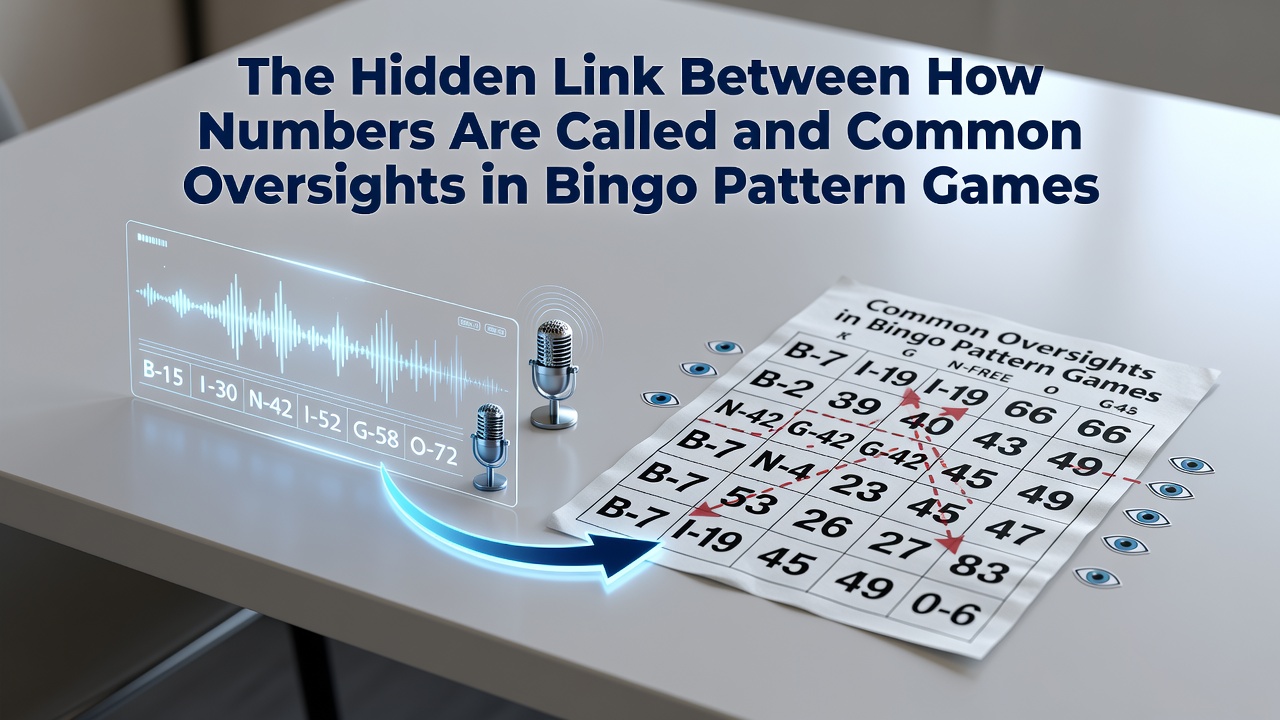
Number calling in bingo takes many forms across different venues and platforms, with announcers using traditional phrases, rapid delivery, or regional slang that players must interpret quickly, and these variations connect directly to frequent oversights when participants track complex patterns like diamonds, windmills, or blackout configurations. Observers note that slower, phrase-based calls allow more time for visual scanning of cards, whereas accelerated numerical sequences often lead to missed marks in multi-line or shaped arrangements.
Core Elements of Number Delivery Across Formats
Traditional halls rely on rhythmic calls that pair each number with a nickname or rhyme, such as "two little ducks" for 22, and these methods appear in community centers throughout North America and Europe where players maintain paper cards; data from industry reports indicate that such approaches reduce immediate recognition errors by giving auditory cues that reinforce visual checks. Modern electronic systems, by contrast, deliver numbers at intervals as short as three seconds with minimal elaboration, and researchers at institutions like the University of Nevada have documented higher rates of pattern misalignment in these environments because participants struggle to cross-reference fast announcements against evolving shapes on digital displays.
Speed and clarity interact with card layout in measurable ways, since single-number calls without context force players to rely solely on memory for positions, while augmented calls that include column letters help anchor attention yet still produce gaps when patterns require diagonal or corner focus. Studies conducted in Australian gaming venues during 2025 revealed that mixed-language announcements in multicultural settings increased oversight incidents by 18 percent compared with uniform English phrasing, particularly in games featuring arrow or letter-shaped wins.
Pattern Types and Recognition Challenges
Bingo patterns range from simple horizontal lines to intricate designs that span multiple sections of the card, and each demands sustained attention that number delivery can either support or disrupt. Straight-line wins remain easiest to track under rapid calling because they align with column structures, whereas diagonal and custom shapes require constant mental mapping that falters when announcements skip contextual hints. Evidence from Canadian provincial lottery analyses shows that blackout games, which fill entire cards, generate the most frequent oversights during high-speed sessions because cumulative marking errors compound without verbal reinforcement.
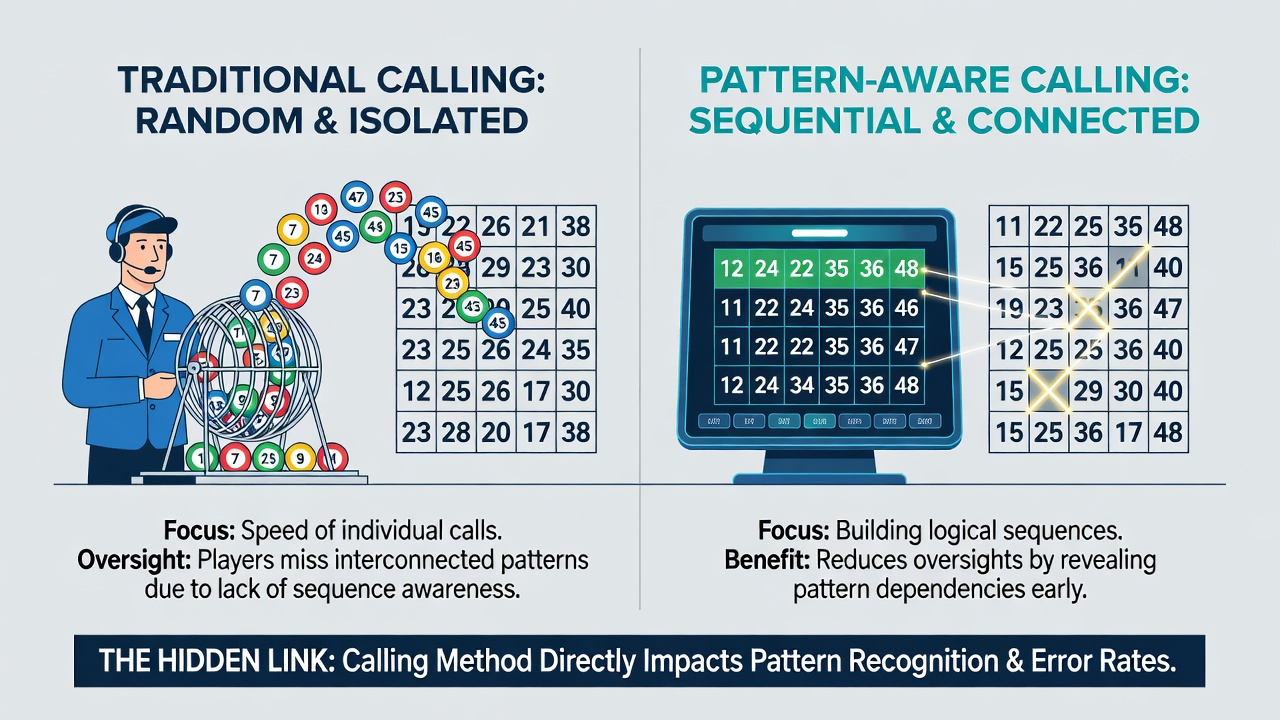
Layout differences amplify these effects, with 75-ball and 90-ball variants presenting distinct grids that respond differently to calling styles; players in 90-ball formats often overlook vertical patterns when calls emphasize numbers without column references, and similar patterns emerge in online adaptations where automated voices omit traditional slang. August 2026 schedules for major tournaments across several provinces include trials of hybrid calling systems that blend speed with selective nicknames, and preliminary figures suggest these adjustments lower mistake frequencies in shaped-pattern rounds.
Documented Connections Between Calls and Errors
Research compiled by the North American Association of State and Provincial Lotteries links announcement pace to specific oversight types, noting that numbers delivered in under four seconds correlate with elevated rates of missed intersections in X-pattern and postage-stamp configurations. One study from an academic team at McGill University tracked sessions over six months and found that venues using consistent rhyming calls recorded 12 percent fewer pattern-related disputes than those employing neutral numeric delivery, because mnemonic devices aid spatial recall during fast play.
Regional rhythms further influence outcomes, as documented in comparative reviews of European and Asian bingo operations where tonal languages introduce additional processing layers that sometimes delay mark placement. Those who have examined session logs observe that players accustomed to one calling convention frequently misalign marks when switching to another, especially in pattern games that require tracking non-linear progressions.
Platform Differences and Emerging Data
Online platforms introduce automated voices that standardize pronunciation yet remove visual cues from live callers, and industry statistics indicate these changes shift error profiles toward premature daubing rather than complete misses. A report issued by the World Lottery Association in early 2026 highlighted that integration of optional text-to-speech customization reduced oversights in pattern-heavy variants by allowing users to adjust delivery speed according to personal preference. Physical halls, meanwhile, maintain live interaction that permits clarification requests, though background noise in larger venues can still interfere with accurate number reception during dense pattern sequences.
Conclusion
Connections between number calling methods and oversight patterns in bingo emerge consistently across data sets from multiple regions, with pace, phrasing, and contextual support each playing measurable roles in how accurately participants complete shaped wins. Continued monitoring of these factors through 2026 and beyond provides clearer insight into adjustments that align announcement techniques with the demands of varied game formats.