Verbal Nuances Affecting Win Spotting in Various Bingo Games
Katja Powell · Sep 10, 2026

Verbal Nuances Affecting Win Spotting in Various Bingo Games
Number announcements in bingo create specific challenges for players who track patterns across different game formats, and researchers have documented how phrasing variations lead to recognition delays during live sessions. Data from multiple gaming studies indicate that callers use distinct verbal structures in 75-ball versus 90-ball variants, which affects how quickly participants identify completed lines on their cards. Observers note that these differences appear consistently in both physical halls and online streams, where audio delivery styles vary by platform.
Regional calling conventions introduce further layers of complexity. In North American venues operators often employ rhyming phrases for certain numbers, whereas European halls favor direct numerical statements, and studies show players switching between these systems experience higher rates of overlooked patterns. September 2026 brings scheduled international gaming conferences that will examine these announcement protocols in detail, with presentations scheduled to cover data from recent cross-border player surveys.
Phrasing Patterns and Their Effects on Line Detection
Callers structure their announcements differently depending on the bingo variant in play, and this structure influences player response times according to recorded session analyses. For instance, some operators precede the number with descriptive qualifiers while others deliver the digits first, creating momentary processing gaps for those monitoring multiple cards. Research indicates that such variations contribute to missed horizontal, vertical, and diagonal completions when games accelerate in later rounds.
One documented case involved a series of 80-ball sessions where callers alternated between full-sentence formats and abbreviated calls, resulting in measurable increases in unclaimed wins during peak evening hours. Those who study these interactions point to the cognitive load created when players must translate the verbal cue into the corresponding grid position before the next number arrives.
Slang Usage Across Different Bingo Formats
Slang terms appear frequently in certain regions yet remain absent in others, and this inconsistency trips up participants who encounter unfamiliar phrasing during pattern hunts. In some 75-ball games operators announce combinations using traditional nicknames, whereas 90-ball sessions typically stick to numerical sequences alone. Evidence from player behavior logs reveals elevated error frequencies when individuals transition between these linguistic environments without prior exposure.
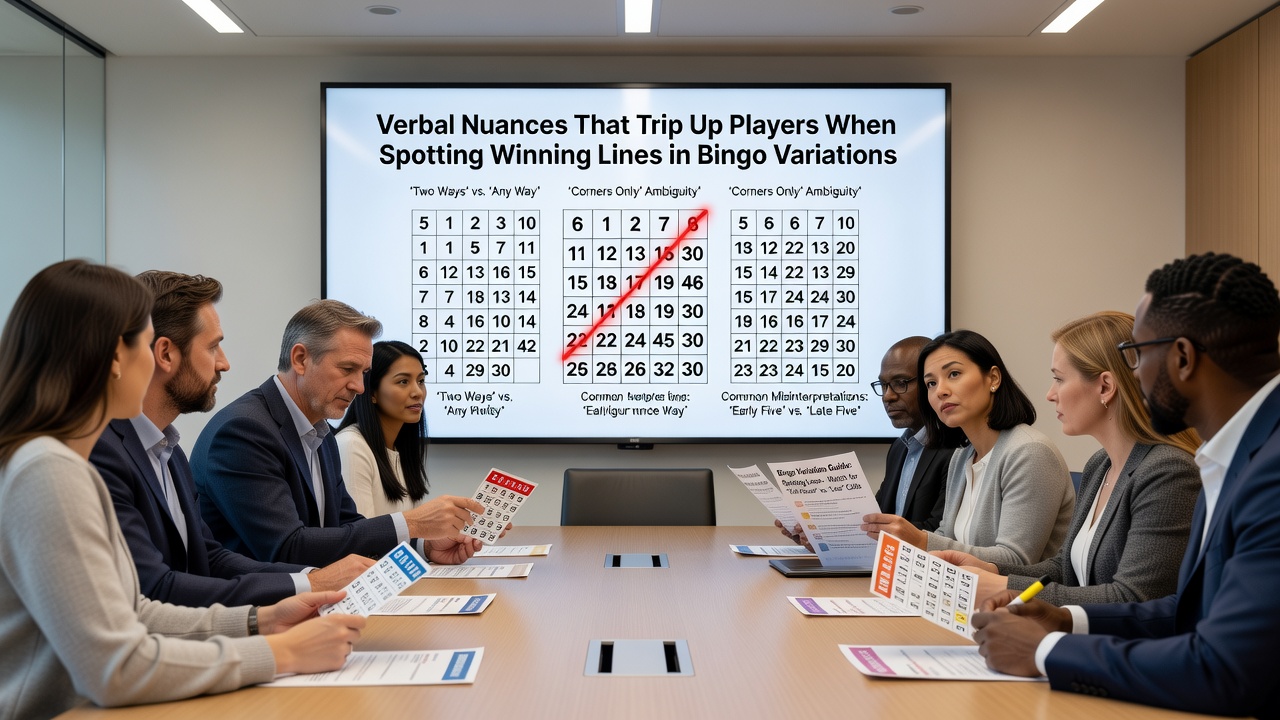
Industry reports from the Australian Gambling Research Centre highlight similar patterns in multi-format tournaments, where mixed slang usage correlated with delayed pattern recognition among traveling players. Participants often report needing additional seconds to map the slang term to its numerical equivalent, during which subsequent calls continue.
Speed, Accent, and Audio Clarity Factors
Delivery speed interacts with verbal nuances in ways that compound recognition difficulties, particularly when callers maintain rapid pacing across extended sessions. Accent variations further complicate matters in international or online environments, where audio compression can obscure consonant distinctions between similar-sounding numbers. Analyses conducted by the University of Nevada gaming research group demonstrate that these combined elements produce measurable spikes in oversight incidents during high-volume play periods.
Players who monitor several cards simultaneously face added pressure when announcement clarity drops, and session data confirms that error rates rise proportionally with the number of active grids. Operators have responded by testing standardized announcement scripts in select markets, though adoption remains uneven across different regulatory jurisdictions.
Platform Differences in Call Presentation
Online platforms introduce additional verbal elements through automated systems or live-streamed hosts, and these formats present unique phrasing challenges compared with traditional hall environments. Some digital interfaces layer text confirmations alongside audio calls, while others rely solely on voice delivery, creating divergent experiences for users who switch between services. Observers tracking platform analytics note that players accustomed to one style frequently encounter adjustment periods when moving to another.
September 2026 updates to streaming protocols in several markets aim to standardize audio quality benchmarks, which may reduce some of the clarity-related issues documented in earlier player surveys. Those examining these changes anticipate further refinements based on feedback collected during the transition period.
Conclusion
Verbal nuances embedded in bingo announcements continue to shape how participants identify winning lines across game variations, with documented effects appearing in both physical and digital settings. Continued examination of these linguistic and delivery factors provides operators and researchers with concrete data points for improving recognition accuracy. As formats evolve and player bases expand, attention to announcement consistency remains a central element in maintaining smooth gameplay flow.